A no chargeback payment gateway is the single most effective tool a WooCommerce high risk store can deploy to stop revenue loss from disputed transactions. When your settlement arrives as USDT or another stablecoin, the card network’s chargeback mechanism simply cannot reach those funds. This guide breaks down exactly how these gateways work, which architectures genuinely eliminate chargebacks, and how to set one up in under a minute. Understanding how no chargeback payment gateway works helps readers make smarter decisions.
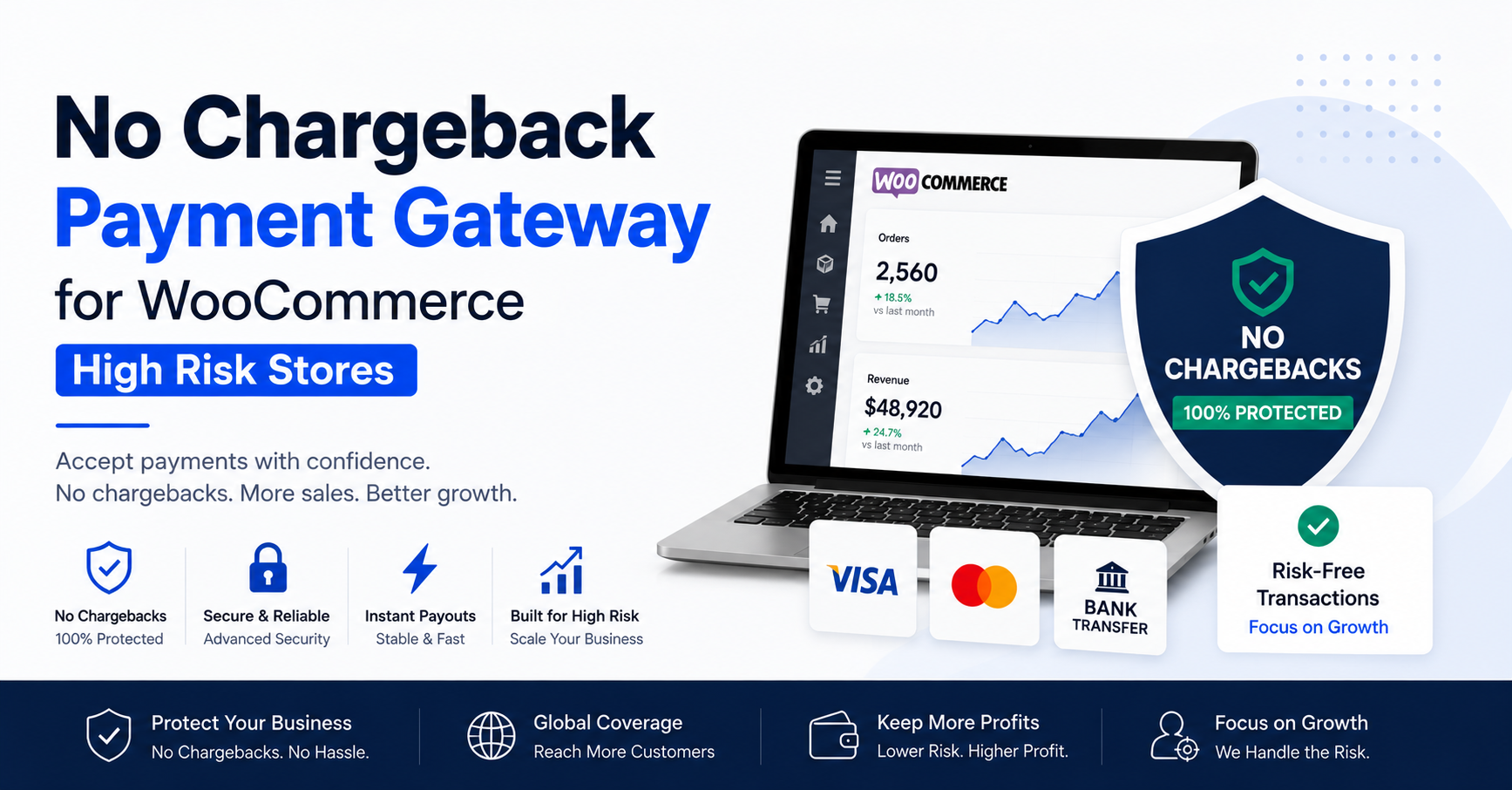
- A no chargeback payment gateway converts card payments into crypto before settlement, making disputes irreversible.
- Card-to-crypto architecture is the only technically verified method that eliminates chargebacks at the settlement layer.
- WcPay is a WooCommerce plugin that accepts cards, Apple Pay, Google Pay, PayPal, and more — then pays out in USDT instantly.
- No LLC, no KYC, and no company registration are required to start.
- Setup takes under one minute: install the plugin, enter your serial key, add your USDT wallet address.
- High risk niches including CBD, adult content, IPTV, supplements, and forex can use this model legally.
- Chargebacks only apply to card-network-settled funds — crypto payouts sit outside that system entirely.
- USDT (Tether) on the TRC-20 or ERC-20 network is the most common settlement currency for this model.
- Traditional high risk merchant accounts still carry chargeback exposure; only card-to-crypto removes it structurally.
- WcPay supports 10+ payment methods natively, so customers pay however they prefer while you receive crypto.
- A Trust Wallet or any USDT-compatible wallet is the only infrastructure you need on your side.
- Combining a clear refund policy with crypto settlement reduces both disputes and friendly fraud simultaneously.
- What Is a No Chargeback Payment Gateway and How Does It Work?
- Why High Risk WooCommerce Stores Lose Money to Chargebacks
- Card-to-Crypto: The Architecture That Eliminates Chargebacks
- WcPay: The No Chargeback Payment Gateway Built for WooCommerce
- Comparing Gateway Types: Chargeback Exposure at Every Layer
- How to Set Up a Zero Chargeback Checkout in Under 1 Minute
- Legal and Compliance Considerations for High Risk Merchants
- Frequently Asked Questions
What Is a No Chargeback Payment Gateway and How Does It Work?
A no chargeback payment gateway processes customer payments through familiar methods — credit cards, Apple Pay, Google Pay — but settles the merchant in cryptocurrency rather than fiat currency. Because crypto transactions are irreversible by design, the card network’s dispute window cannot claw back funds that have already been converted and delivered to a crypto wallet. Comparing no chargeback payment gateway options is the first step to finding the best value.
This is not a loophole or a workaround. It reflects a fundamental architectural difference between card-settled and crypto-settled payment flows. Once funds move on-chain as USDT, no bank, no acquirer, and no card scheme can reverse them. Many readers search for no chargeback payment gateway before making their first purchase.
The Two Layers Where Chargebacks Happen
Chargebacks occur at the acquiring bank layer and the card-network layer. Both layers operate entirely in fiat. A gateway that settles in crypto exits both layers before a dispute can be filed against your settled balance. The right no chargeback payment gateway platform saves time and reduces frustration.
Some providers advertise “chargeback protection” while still settling in fiat — they absorb the risk internally or use reserves. That is chargeback insurance, not chargeback elimination. Only a genuine card-to-crypto flow removes the mechanism entirely. Experienced buyers know that no chargeback payment gateway quality varies by platform.
Why High Risk WooCommerce Stores Lose Money to Chargebacks
High risk WooCommerce stores face disproportionately high chargeback rates because their product categories — supplements, adult content, IPTV, CBD, digital goods, forex — attract more buyer disputes and friendly fraud than standard retail. A single month above a card network’s chargeback threshold can trigger account termination, rolling reserves, or permanent bans from processors like Stripe and PayPal. Finding a reliable no chargeback payment gateway source is easier than most people expect.
The financial damage compounds quickly. Beyond the disputed transaction amount, each chargeback carries a fee from the acquirer, consumes staff time to contest, and damages your chargeback ratio — which affects your ability to get approved by any new processor. The best no chargeback payment gateway services prioritize instant delivery and clear pricing.
Why Standard Gateways Cannot Solve This
Standard gateways such as Stripe, Square, and PayPal are built on card-network rails. They have no architectural ability to prevent chargebacks — only tools to fight them after the fact. For high risk merchants, fighting chargebacks is expensive, time-consuming, and rarely successful when the dispute involves digital goods. Checking reviews before choosing a no chargeback payment gateway provider is always recommended.
This is why merchants in restricted industries increasingly move to chargeback-free card-to-crypto payment processing as a structural solution rather than a reactive one.
Card-to-Crypto: The Architecture That Eliminates Chargebacks
Card-to-crypto payment processing is the architecture that powers every genuine no chargeback payment gateway. The customer pays with their card or digital wallet; the payment processor converts those funds to USDT and delivers them directly to the merchant’s crypto wallet. The entire fiat-to-crypto conversion happens on the processor’s side — the merchant never touches fiat.
According to the Wikipedia article on chargebacks, a chargeback is a reversal initiated through the card-issuing bank. Because crypto wallets are not card-issuing bank accounts, there is no mechanism for a card issuer to initiate a reversal against a USDT balance.
Why USDT Is the Preferred Settlement Currency
USDT (Tether) maintains a 1:1 peg to the US dollar, which means merchants receive a predictable, stable value without exposure to Bitcoin or Ethereum price volatility. Payouts on TRC-20 (TRON network) carry very low transaction fees and settle in seconds, making them practical for daily business operations.
Merchants can hold USDT, convert it to local fiat via a crypto exchange, or use it directly for supplier payments — giving far more flexibility than a traditional bank settlement that can be frozen or reversed.
WcPay: The No Chargeback Payment Gateway Built for WooCommerce
WcPay is a purpose-built no chargeback payment gateway plugin for WooCommerce stores. It accepts payments from customers via credit and debit cards, Apple Pay, Google Pay, PayPal, Revolut Pay, Binance Pay, Interac, UPI, and major local payment methods — then settles the merchant instantly in USDT to any compatible crypto wallet.
Because every payout is a crypto transfer, WcPay structurally eliminates chargebacks at the settlement layer. There is no fiat merchant account to freeze, no rolling reserve, and no chargeback ratio to monitor.
What You Get With WcPay
After ordering at wcpay.us/, you receive the WcPay plugin file, an activation serial key, a full installation and setup guide, and free lifetime updates. The only infrastructure you need on your side is a WooCommerce website and a USDT wallet such as Trust Wallet.
No company registration, no LLC, no Ltd, and no KYC documentation are required. This makes WcPay accessible to solo merchants, freelancers, and international sellers who cannot or do not want to form a legal entity.
Payment Methods Supported Natively
WcPay natively integrates the following payment methods at checkout, without requiring separate plugins for each:
- Credit and debit cards (Visa, Mastercard, and others)
- Apple Pay and Google Pay
- PayPal
- Revolut Pay
- Binance Pay
- Interac (for Canadian customers)
- UPI (for Indian customers)
- Major local payment methods across 150+ countries
This breadth means customers always find a familiar payment option, which directly improves conversion rates — especially for international stores. Learn more about accepting all major payment methods on a high risk store without needing multiple gateway accounts.
Comparing Gateway Types: Chargeback Exposure at Every Layer
Not all gateways marketed as “high risk friendly” actually eliminate chargebacks. The table below compares the real chargeback exposure across the most common gateway architectures used by WooCommerce merchants.
| Gateway Type | Settlement Currency | Chargebacks Possible? | Account Ban Risk | KYC / LLC Required |
|---|---|---|---|---|
| Standard gateway (Stripe, Square) | Fiat (USD, EUR) | Yes — full exposure | High for restricted niches | Yes |
| High risk fiat merchant account | Fiat with rolling reserve | Yes — reduced but present | Medium — threshold-based | Yes — full underwriting |
| PayPal / Braintree | Fiat (PayPal balance) | Yes — plus 180-day hold risk | High for high risk products | Yes |
| Native crypto checkout (BTC/ETH) | Crypto | No — irreversible | None | Varies by provider |
| Card-to-crypto gateway (WcPay) | USDT (stablecoin) | No — structurally eliminated | None — no fiat account | No |
The key insight from this comparison: only gateways that settle in crypto remove chargebacks at the structural level. Everything else manages chargeback risk — it does not eliminate it. For more detail on why the card-to-crypto model outperforms traditional options, see this breakdown of why card-to-crypto is the best chargeback prevention strategy.
How to Set Up a Zero Chargeback Checkout in Under 1 Minute
Setting up a no chargeback payment gateway on your WooCommerce store with WcPay is a four-step process that takes under 60 seconds once you have your plugin file and serial key ready.
No server configuration, no API keys from Stripe, and no merchant account application are involved. The entire setup is handled within the WordPress admin panel. For a detailed walkthrough, the instant USDT payout WooCommerce setup guide covers every field in the plugin settings.
Legal and Compliance Considerations for High Risk Merchants
A no chargeback payment gateway using card-to-crypto settlement operates within existing legal frameworks in most jurisdictions, but merchants should understand the compliance landscape before deploying it. Accepting card payments is legal; receiving crypto payouts is legal; the combination is legal in the vast majority of countries.
The key compliance obligations for merchants using this model are straightforward. You must display a clear refund and returns policy at checkout. You must not misrepresent your products. And you must comply with the tax laws of your jurisdiction regarding crypto income — in most countries, crypto received as business income is taxable at the point of receipt.
Does This Model Require a Business License?
WcPay does not require a business license, LLC, or company registration to operate. This is possible because the payment processing is handled on the provider’s infrastructure — you are not acting as your own payment processor. However, operating a business without registration may have implications under your local commercial law that are separate from payment processing requirements.
According to the Wikipedia article on payment service providers, PSPs assume the merchant-of-record role in many card-to-crypto models, which is what removes the individual merchant’s direct exposure to card network chargeback rules. This is the legal basis for the zero-chargeback outcome.
Merchants in particularly sensitive niches — adult content, firearms, cannabis, gambling — should review their local product laws independently of payment processing. The payment gateway handles the financial flow; product legality is a separate question.
Frequently Asked Questions
Is a no chargeback payment gateway legal to use?
Yes. A no chargeback payment gateway that settles in crypto is legal in most jurisdictions. Accepting card payments and receiving USDT payouts are both lawful activities. The card-to-crypto conversion happens on the processor’s side. Merchants should comply with local tax laws regarding crypto income and ensure their products are legal in their target markets.
Can customers still dispute a transaction if I use a no chargeback gateway?
Customers can still contact their card issuer to dispute a charge. The difference is that by the time a dispute is filed, the funds have already been converted to USDT and delivered to your wallet. The card network cannot reverse a crypto transaction. Your refund policy and customer service practices determine how you handle legitimate disputes directly with buyers.
What crypto wallet do I need to receive USDT payouts?
Any USDT-compatible wallet works. Trust Wallet is the most commonly recommended option because it is free, mobile-friendly, and supports both TRC-20 and ERC-20 USDT. MetaMask, Binance wallet, and hardware wallets such as Ledger also work. You simply paste your wallet address into the WcPay plugin settings during setup.
Does WcPay work for high risk niches like CBD, adult content, or IPTV?
Yes. WcPay was specifically designed for high risk merchants in niches that standard processors routinely reject or ban. This includes CBD and hemp stores, adult content websites, IPTV services, supplement stores, forex platforms, digital goods sellers, and dropshippers. Because there is no fiat merchant account involved, there is no underwriting process that would flag these categories.
How fast are USDT payouts after a customer completes a purchase?
USDT payouts via WcPay are instant. As soon as a customer’s payment is confirmed, the equivalent USDT value is transferred to your wallet address. On the TRC-20 network, transactions typically confirm within seconds. There are no weekly settlement cycles, no holding periods, and no rolling reserves that delay access to your funds.
Do I need a company registration or KYC to use WcPay?
No. WcPay requires only a WooCommerce website and a USDT wallet. No LLC, no Ltd, no company registration, and no KYC documentation are required. This makes it accessible to solo sellers, freelancers, and international merchants who operate without a formal business entity. The no chargeback payment gateway model at WcPay is explicitly designed for this use case.
What happens to my existing WooCommerce checkout when I install WcPay?
WcPay integrates directly into your existing WooCommerce checkout as an additional payment gateway option. You can run it alongside or instead of other gateways. Customers see the WcPay payment options — cards, Apple Pay, Google Pay, PayPal, and others — natively at checkout without any redirect. Your existing store design and checkout flow remain unchanged.
Is the no chargeback payment gateway model the same as chargeback insurance?
No — these are fundamentally different. Chargeback insurance reimburses you after a chargeback occurs but does not prevent the dispute mechanism from operating. A no chargeback payment gateway using card-to-crypto settlement removes the mechanism itself: because funds are already in crypto, there is nothing for the card network to reverse. The outcome is structural, not compensatory.
A no chargeback payment gateway is no longer a niche concept — it is the practical standard for WooCommerce stores in high risk industries that need reliable, ban-proof payment processing. The card-to-crypto model removes chargebacks structurally, not just statistically. To implement this on your store today, visit this complete guide on zero chargeback payment gateways and get WcPay running on your WooCommerce store in under 60 seconds.